Canning & Preserving Your Own Harvest An Encyclopedia of Country Living Guide From the Estate of Carla Emery.
When & how to harvest and what supplies are needed to preserve your harvest.
Equipped with the knowledge of when to harvest, how to harvest, and what supplies are needed to preserve your harvest, anyone can learn what it takes to create authentic, old fashioned recipes in the age of supermarket dependence.
Carla Emery's in-depth knowledge comes from her years spent with farmers and homesteaders who truly lived off the land. Culling from and expanding on sections in the famed Encyclopedia of Country Living, co-auhor Lorene Forkner offers a discussion of our changing motivation as food consumers, detailed explanations of the processes behind canning and preserving, and a wealth of recipes for fruits, vegetables, meats and fish, and herbs. From drying to pickling to freezing, Emery's preserving methods are as broad in scope as the recipes themselves. Do-it-yourselfers can welcome summer's arrival with Chunky Peach Jam and Bouquets and Smoked Chicken. Step-by-step instructions, illustrations, charts, and informational sidebars make the process easy and enjoyable.
Price: $16.95
Extending the Table: A World Community Cookbook Joetta Handrich Schlabach with Kristina Mast Burnett
Picture a vast table with room for everyone and laden with taste-tempting dishes from over 80 countries. Peach Chutney from Botswana, Ginger Cooler from Ivory Coast, Pork Vindaloo from India, Buyani's Chicken Soup from Indonesia, Rice Noodles with Vegetables from the Philippines. Interspersed among the recipes are stories about how hospitality is practiced around the world.
Extending the Table follows in the tradition of the More-with-Less Cookbook, written by Joetta Handrich Schlabach with recipe editor Kristina Mast Burnett.
Quotes:
"For all of us, [this book] provides repeated opportunities to take part in the lives of people around the world and to delight in the wealth they have to offer. As we are able to treat other peoples and traditions with respect and tenderness, we too are changed" —Paul Longacre, from the Foreword
Spiral $24.99
Four Food Storage Plans Sue Gregg
Why Food Storage?
Survivors of the Great Depression of the 1930's learned to save. They still wind string into balls, save glass jars, and accumulate plastic containers as well. Canned peaches, pears, preserves, tomatoes, jams, and jellies as well as sacks of potatoes and onions, filberts and walnuts for cracking, a basket or two of apples, and a case of ripening pears fill their well-stocked pantries in anticipation of tornados, blizzards, and economic crises. In a mostly rural America butchering and pickling, plucking and picking were part of their everyday life. The stores they put away would last well into the next growing and hunting season and beyond. The mere two to three day supply of food in most American city dwellers' homes today would have been cause for concern in pre-World War II rural America.
WWII followed the Great Depression. That meant ration stamps that curtailed gasoline, meat, and sugar consumption. Planting a Victory Garden was a patriotic duty. Many Americans still have memories of what it means to do without.
The second half of the 20th century, marked a time of unparalleled prosperity despite the Cold War nuclear threat, the Korean Conflict, Vietnam, the Gas Crunch (that's when Americans lined up for gas on odd and even days), and the Gulf War. The computerized robotic monsters of sci-fi fiction could be defeated. But we never dreamed how the benign omission of two digits from computer chips capable of outperforming the World Grand Master Chess Champion could cause so much concern called Y2k. How could such a blessing harbor such a curse? Or could it also be a blessing in disguise to motivate some wise preparation for any number of unexpected challenges to the uninterrupted flow of food to our tables.
Devastation comes in many forms--hurricanes, tornados, floods, blizzards, earthquakes, fire, landslides, drought, strikes, job loss, divorce, death of wage earner, bankruptcy, crime, famine, war, Chernobyl, and, perhaps, economic threats like the gas crunch crisis, Y2K, or terrorists' threats. This book shows you how to prepare to meet the needs of your family and to become a resource for others who may find their reserves depleted and their lives devastated.
Four Food Storage Plans starts with the assumption: Eat what you store, and store what you eat. Beginning with a basic stock of canned goods found in any supermarket the four plans introduce an increasing variety of recipes that will help you adapt to the kinds of whole foods such as whole grains and beans found in long term food storage programs but at much lower cost. Economize by building your own storage plan for $1.70 to $1.75 per meal at 2,200 calories per day per person. Coping On a Tight, Tight Budget? 27 selected main dishes at $.20 to $1 per serving will fill stomachs and stretch $$$. Menus, recipes, and extensive shopping lists
The author draws from her experience in managing food service for hundreds of junior high, high school, college students, and families for seven summers at Catalina Island's Campus by the Sea without the convenience of electricity, computers, telephone, or delivery trucks. She also wrote a cookbook for an expensive long range commercial food reserve program in the late 70's, inaugurated a whole foods program at a Southern California college preparing students for overseas work, provided food service at camps in Mexico and Honduras, and taught Co-Mission volunteers in Russia food survival skills.
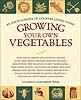
Growing Your Own Vegetables An Encyclopedia of Country Living Guide
Carla Emery and Lorene Edwards Forkner
This handy guide will help you become more self-reliant in the garden.
Whether you're tired of rising supermarket prices or you have a green thumb but need a little guidance, Growing Your Own Vegetables is a handy guide to becoming more self-reliant in the garden. Drawn from the authors' years of hands-on experience and expert advice from the best-selling Encyclopedia of Country Living, this guide is a complete manual for creating a vegetable garden, including planning, size considerations, seasonal conditions, climate zones, and other cultivation basics.
The second part of the book is a crop-by-crop guide to planting, cultivating, and harvesting teh delicious vegetables we love to eat: onions, leafy greens, stems and flowers (rhubarb, artichoke, broccoli), roots, (spuds, radishes, jicama), grasses and grains (just imagine: your own wheat field!) legumes, gourds, and the nightshade family (that would be tomatoes, peppers and eggplant). Packed full of information, Growing Your Own Vegetables is an invaluable resource for home gardeners of all stripes.
Price: $17.95
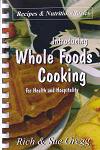
Introducing Whole Foods Cooking Sue Gregg
Introducing Whole Foods Cooking dispels the myth that healthy whole foods must necessarily be appetite appeal-less.
Model recipes start you on a culinary adventure that breaks the barriers to success without resorting to white flour, white sugar, or hydrogenated shortening. Essential nutritional concepts and the 2 Stage Process explained. Serving and Connecting segment shows you how to make Jesus a welcome guest at your table. PowerPoint Demo CD includes group teaching materials and a high school level semester course for Menu Planning and Meal Preparation. 75 pages
Price: $17.00
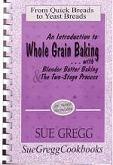
Introducing Whole Grain Baking ... Sue Gregg
Introducing Whole Grain Baking with Blender Batter Baking and The Two Stage Process: 12 model quick bread recipes and 18 yeast bread recipes apply Nourishing Traditions research.
Soak, sprout, and sponge to break down phytates, increase nutritional value and improve digestibility. Use allergy alternative grains. Cookbook serves as a text for the Baking with Whole Grains high school level curriculum. 173 pages with PowerPoint Demo CD.
Price: $23.00
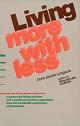
Living More With Less Doris Jazen Longacre
From the author of More-with-Less Cookbook, Doris Janzen Longacre provides a pattern for living with less and a wealth of practical suggestions from the worldwide experiences of Mennonites in chapters on money, clothing, homes, transportation and travel, celebrations, and recreation.
Paper $12.99
Recipes from the Old Mill Baking with Whole Grains
Sarah E. Myers and Mary Beth Lind
More than 180 recipes for a multitude of breads, sweet rolls, international grain dishes, and deserts. Two sisters whose family has operated a mill for two generations.